

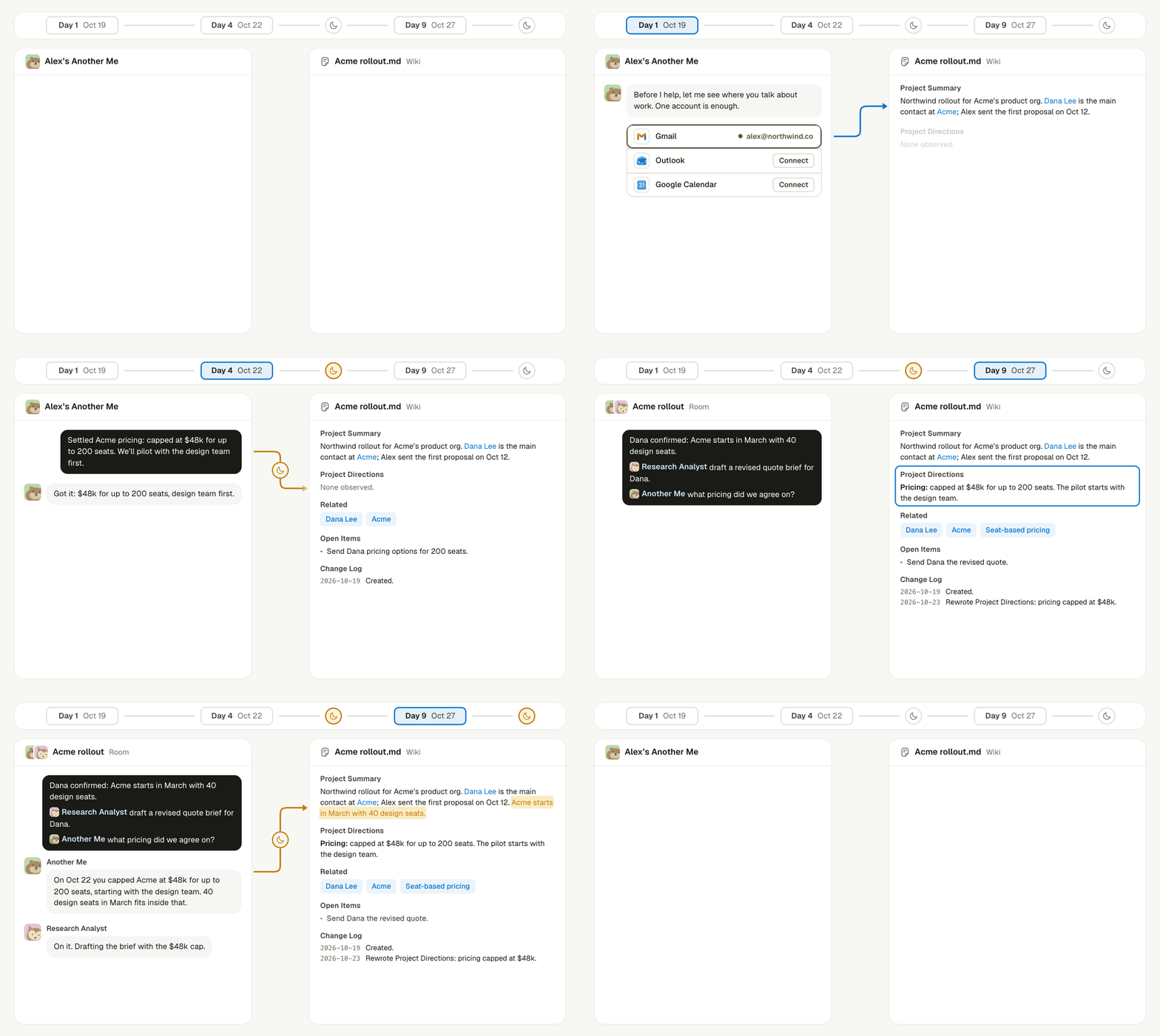
One page grows over nine days from mail and chat.
What does personal memory record?
Personal memory keeps one page per real-world entity, so every fact has one home. Clients, contacts, projects, and topics each get their own pages. Each conversation or meeting gets a Session page that links to the entities it touched.How does it stay current?
Personal memory has two parts. Raw keeps your sources as they were, with short facts pulled from your conversations. The Wiki is written from Raw: pages about the people and work in your life, and daily and weekly reports. Most of Raw arrives during the day. Each night, only the Wiki pages that the day’s sources touch are updated. Yourmemory.md, the short portrait Another Me reads in every chat, is updated alongside it.
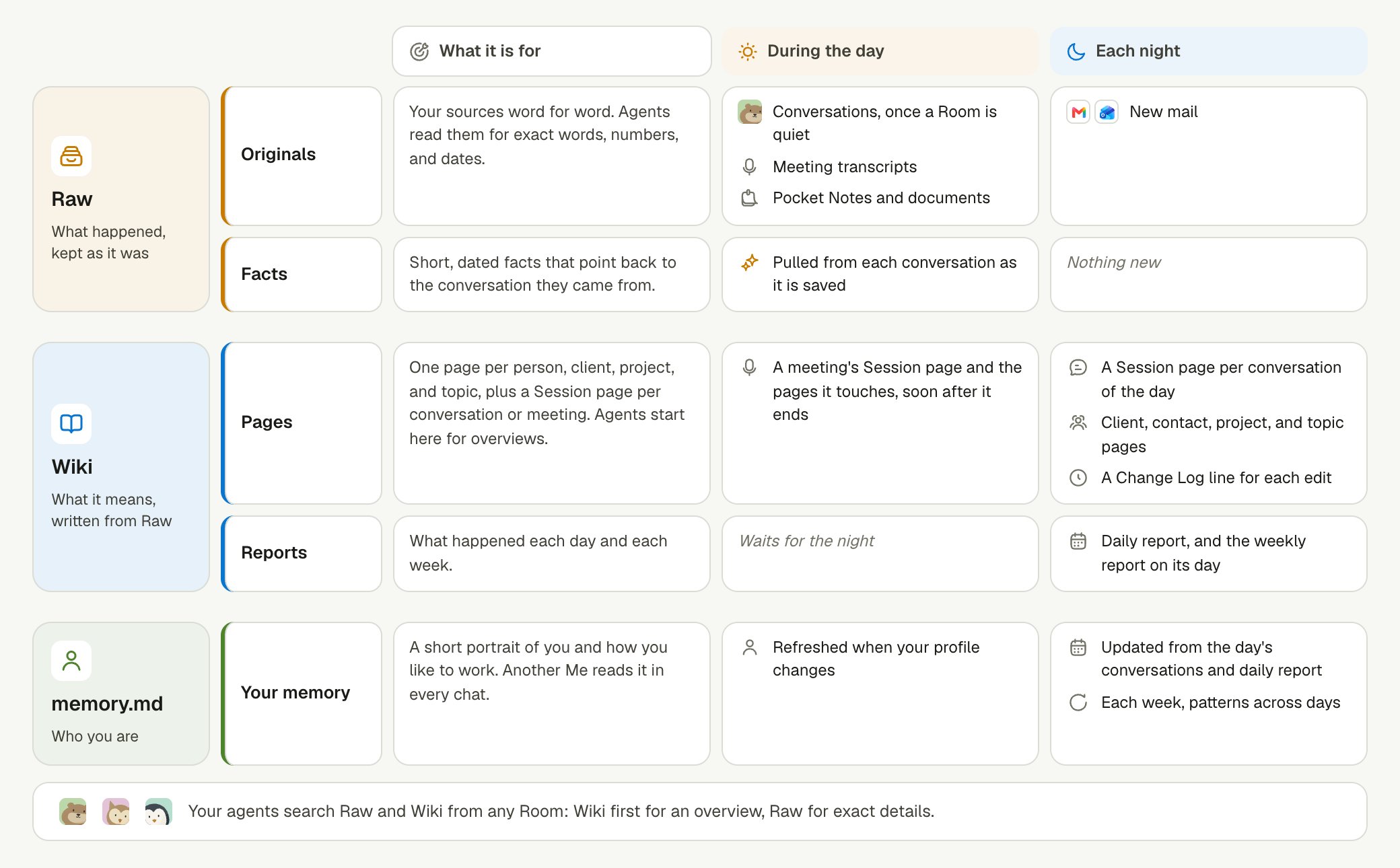
What each part is for, and what updates it during the day and each night.
TZ. See Environment variables.
How does a page change?
A model suggests the edits, and the app checks each one before it lands. Facts the update does not touch stay as they were, and every fact points to the message or file it came from. Each page also has a Change Log, written by the app. If something looks wrong, check the log and follow the source.How do agents search it?
Agents search through the CLI, from any Room. One search covers both parts, and each result names where it came from. An agent can search only the personal memory of the person it works for. An agent starts with the Wiki for an overview, then reads Raw for exact words, numbers, and dates. Before it says something was never recorded, it must search Raw. An agent can search with other wordings and in other languages, so a question in one language can find a page written in another. If a search comes back empty, there are two fallbacks. The server also scans your most recent originals word by word. If that still finds nothing, the agent searches the files it is allowed to read, such as your documents. Another Me can also open your personal memory as read-only files in its workspace.Keep learning
Agent memory
See what each agent remembers of its own conversations.
Meet Another Me
See the agent that builds and keeps your personal memory.
Connected apps
Connect the inbox that starts your personal memory.
Where your data lives
See where your personal memory and sources are stored.