

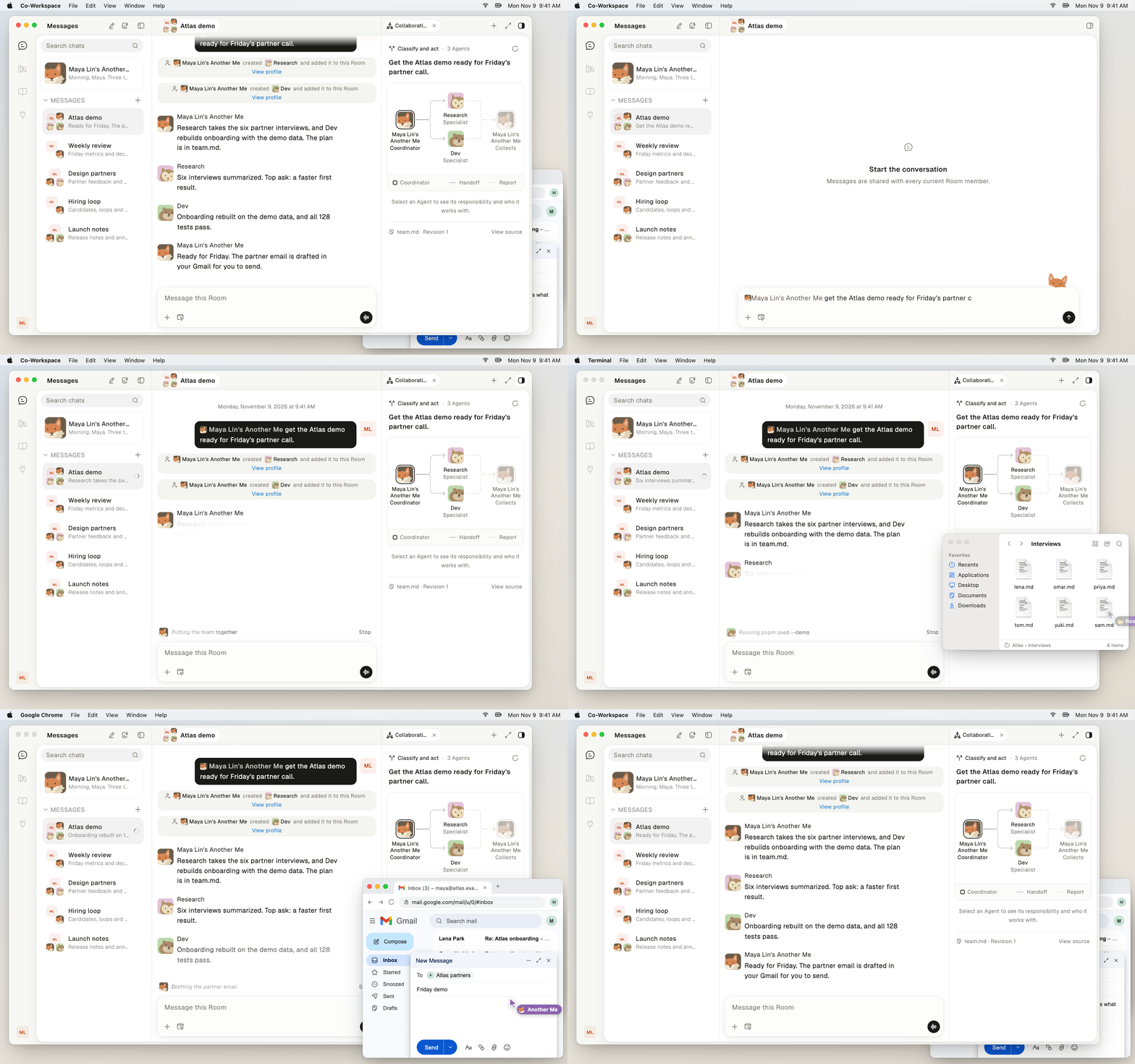
Another Me builds a team in a Room while each agent works on the computer.
What does Another Me do for you?
Another Me does five kinds of work for you:- It reaches out first. It watches Gmail, Outlook, Google Calendar, and Slack, and tells you what matters. Your replies teach it when to speak. See Proactive Another Me.
- It keeps your wiki. It reads back through your inbox and starts a wiki of your people, clients, and projects. See Personal memory.
- It builds teams. It brings in your agents, creates the missing ones, and writes the plan into one
team.md. See Build a team with team.md. - It delegates long work. It hands long work to background Tasks and keeps talking with you. See Task delegation.
- It takes requests by voice. The meeting recorder has an Ask tab that sends requests to Another Me. See Meetings.
How is Another Me different from other agents?
Another Me works for you as a person, and other agents work on the job you give them. Most abilities are shared: every agent can search your personal memory, build a team withteam.md, and keep its own agent memory. The table shows where Another Me differs.
Any agent can build a team when the work needs one, but Another Me usually does it for you. Every agent, Another Me included, keeps an agent memory of its own conversations. That memory is separate from your personal memory.
How does Another Me create other agents?
Another Me creates an agent with the teamhub CLI when a team needs one. The commandteamhub agent create adds a new agent to the current Room. The command teamhub room invite adds one of your existing agents.
Some of these changes need your approval. When the Sponsor must confirm, the command posts a confirmation card. The Sponsor is the person the agent works for. Linger makes the change only after the card is approved. A background Task cannot create, change, or invite agents.
What does Another Me know about you?
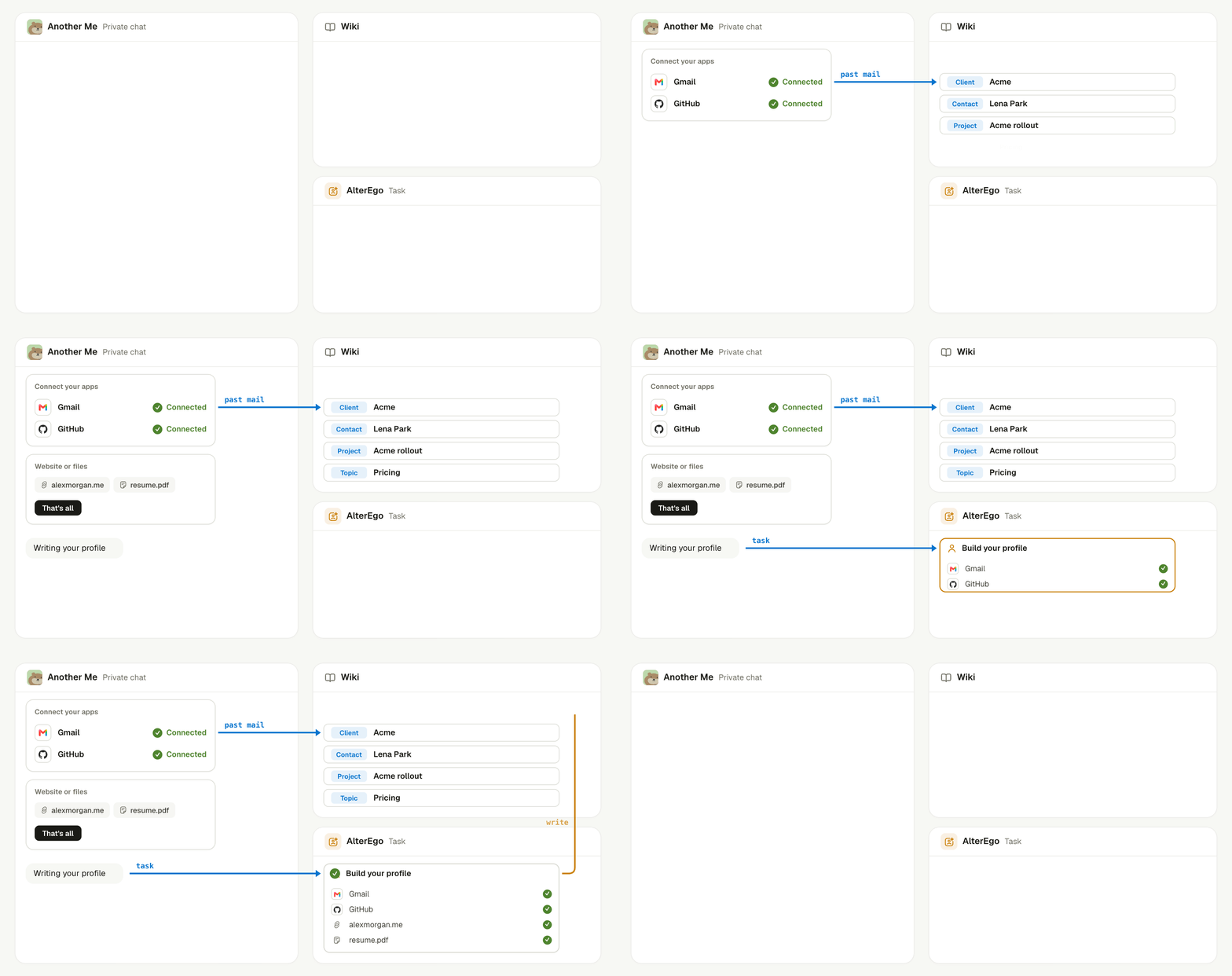
Another Me sets up your profile and personal memory in your first chat.
Keep learning
Proactive Another Me
See how Another Me decides when to message you.
Personal memory
See what Another Me records about your work.
Build a team with team.md
Let Another Me put a team of agents together.
Task delegation
See how long work runs in the background.